Table of Contents
Corporate Volunteering
What Is Corporate Volunteering?
The business practice of corporate volunteering enables organizations to assist their staff members in participating in community service work. The practice of volunteering requires organizations to donate their time and expertise which leads to authentic results in the world.
Definition of Corporate Volunteering
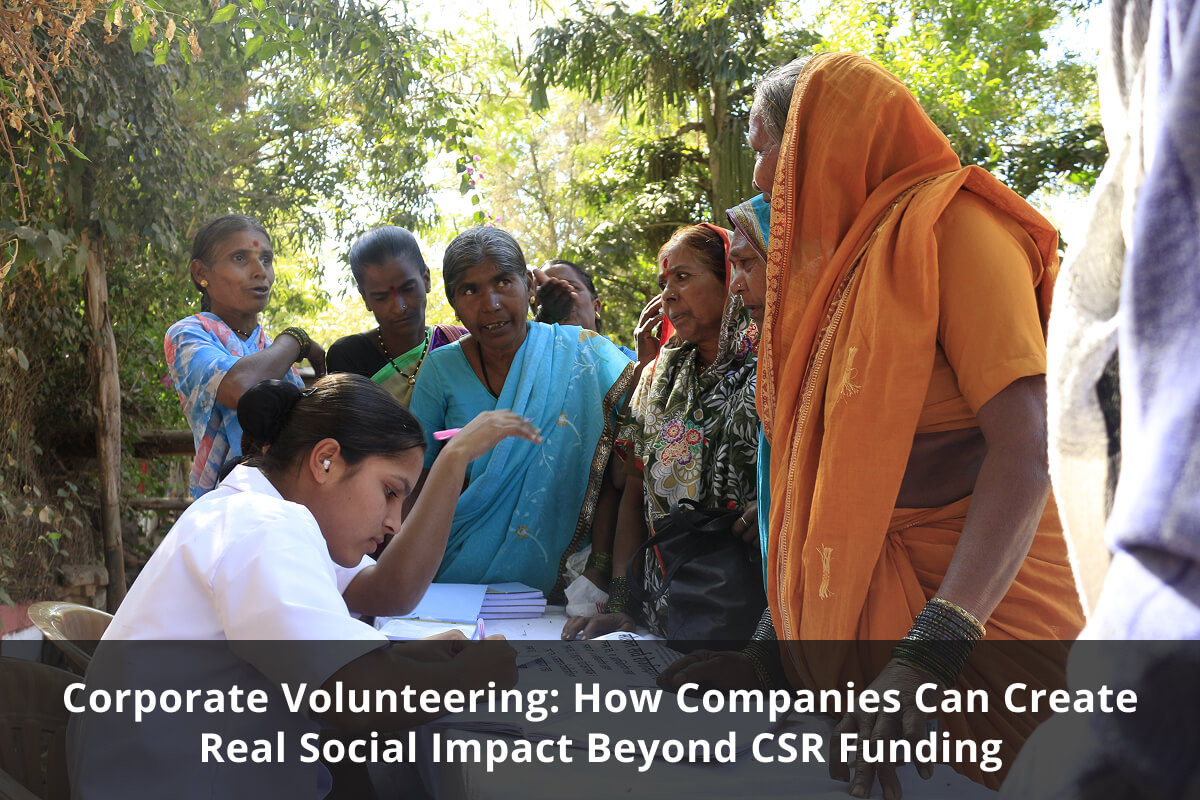
Corporate volunteering means employees participating in social or community work organized or supported by their employer. The program includes various activities which people can perform to support nonprofits through teaching and environmental activities and skill-based assistance.
Difference Between Volunteering and CSR Funding
Companies make financial contributions through CSR funding which supports various causes. People dedicate their time and expertise to volunteering activities. The two activities differ because one provides financial assistance while the other requires direct participation.
Types of Corporate Participation
The companies implement volunteering programs through team-building activities which allow workers to volunteer individually and participate in skill-based assignments. Some organizations establish enduring partnerships with NGOs which enable their staff members to donate time.
Evolution of Corporate Social Responsibility
The initial concept of corporate social responsibility required organizations to provide charitable contributions while adhering to established regulations. The practice has developed into an approach which enables employees to become involved in social transformation activities.
Why Companies Are Shifting Toward Volunteering
Companies have discovered that employees establish stronger connections with their work when they perform tasks which have significant value. The process of volunteering creates brand trust which results in more substantial social effects than financial support.
Why Corporate Volunteering Matters Today
Corporate volunteering has developed into a fundamental element which businesses use to forge connections with their local communities. The growing business demands establish volunteering as the method which links companies between their financial interests and their social responsibilities.
Increasing Demand for Social Responsibility
People today expect companies to take responsibility for social and environmental issues. Businesses need to participate in community development work because people now understand social responsibility better.
Employee Expectations and Engagement
Employees now want to work for organizations that care about more than just business goals. Employees experience higher workplace engagement through their participation in volunteering programs which create better connections between their work and their organization.
Shift Toward Purpose-Driven Organizations
Companies today are changing their business practices to focus on social responsibility instead of generating profits. Organizations now operate through values which emphasize their dedication to social responsibility.
Building Sustainable Impact
Corporate volunteering creates sustainable value because it fulfills actual demands present in local communities. The organization develops solutions which maintain effectiveness beyond temporary funding initiatives and promotional activities.
Enhancing Corporate Reputation
The public tends to view companies which support volunteer programs as better organizations. The process builds trust with customers while it develops a stronger brand identity and better relationships with all company stakeholders.
Corporate Volunteering vs CSR Funding: Key Differences
Social support through corporate volunteering and CSR funding reaches different outcomes through their different operational methods. Financial assistance constitutes one element of the program, while dedicated personnel engagement in the work addresses another aspect.
Financial Contribution vs Active Participation
Organizations use CSR funding as their primary method to provide financial support for various projects and organizations. Employees at the company participate in corporate volunteering by dedicating their time and professional abilities and personal dedication to work.
Short-Term vs Long-Term Impact
Organizations use funding to provide instant assistance during urgent situations and to meet their immediate requirements. Community organizations establish enduring partnerships through their volunteer programs which create permanent improvements.
Employee Engagement Differences
Most organizations manage CSR funding through their internal departments, which restricts employee participation. Employees who participate in volunteering activities develop stronger connections to their work, which leads to a direct relationship with their positive contributions.
Visibility and Brand Impact
Through their financial support, CSR donations enable companies to enhance their brand image by receiving recognition for their contributions. Through their operational activities, volunteering demonstrates actual employee participation, which creates public trust through emotional connections with clients.
Community-Level Outcomes
Communities receive support from CSR funding, which provides them with essential resources and development of infrastructure. Corporate volunteering establishes stronger community connections through its implementation of local initiatives, which empowers volunteers to work together with local residents.
| Aspect | CSR Funding | Corporate Volunteering |
|---|---|---|
| Nature | Financial | Active involvement |
| Engagement | Low | High |
| Impact | Indirect | Direct |
| Employee Role | Minimal | Active |
| Sustainability | Variable | Strong |
Types of Corporate Volunteering Programs
The numerous corporate volunteering programs which exist today operate with different volunteering methods which organizations use to engage their workforce. Some programs require workers to complete short-term tasks whereas other programs need workers to dedicate themselves to extended periods of community service.
Skill-Based Volunteering
Through skill-based volunteering employees use their job skills to assist nonprofit organizations and community initiatives. For example, marketing, finance, or tech professionals can help organizations improve their operations.
Event-Based Volunteering
This type involves short-term activities like charity drives, clean-up campaigns, or donation events. Organizations usually carry it out during special events which take place on designated company volunteering days.
Virtual Volunteering
Employees can perform virtual volunteering activities through online platforms which enable remote work. The activities will include mentoring tasks, tutoring work, and digital support provision which will assist organizations.
Team-Based Community Projects
Employees work in groups to complete community projects using this operational model. The system promotes teamwork among employees while they work toward common social objectives.
Long-Term Partnership Programs
The programs establish continuous working relationships that connect businesses with nonprofit organizations. Employees work on a regular basis to establish long-lasting results which will continue through time.
Benefits of Corporate Volunteering for Companies
Corporate volunteering provides businesses with actual value because it goes beyond charitable work. The organization benefits when employees take part in community service activities. The efforts build up a company’s reputation which employees see through their work and customers and stakeholders observe from outside the company.
Enhanced Brand Image
Companies that back volunteering programs demonstrate their commitment to social responsibility beyond their need to create profit. This helps create public trust through a responsible brand image which customers can believe.
Stronger Stakeholder Relationships
Through their volunteering programs, organizations establish better connections with their clients and business partners and the communities they serve. Collaborative efforts between organizations create connections which develop into deeper bonds.
Improved Employee Retention
Employees who work for organizations which provide them with opportunities to find purpose in their work will remain employed with those organizations. Employees who volunteer experience greater job satisfaction because their emotional bond with their workplace develops stronger.
Positive Public Perception
Companies that support their employees to do volunteer work gain better social standing from the community. The community sees the company as trustworthy which results in better public reputation over time.
Long-Term Business Sustainability
Corporate volunteering helps businesses achieve sustainable development by linking their commercial objectives with their obligations to society. The solution enables businesses to maintain their market presence while remaining strong throughout times of change.
Benefits for Employees and Workplace Culture
Corporate volunteering provides advantages to communities while also delivering employment benefits and workplace improvements. People who participate in social activities outside their regular job responsibilities gain new perspectives about their professional duties.
Increased Employee Engagement
Volunteering provides employees with a chance to leave their daily tasks while they participate in important work which brings them greater workplace involvement. This frequently results in employees experiencing better work performance and developing stronger organizational loyalty.
Skill Development and Leadership Growth
Employees receive opportunities to acquire new abilities which include both communication and problem-solving and leadership development. The work experience leads to improved professional ability for employees who undergo these experiences.
Improved Job Satisfaction
Engaging in socially beneficial projects makes work more satisfying for employees. Employees experience greater happiness when their organization backs important social initiatives.
Stronger Team Collaboration
Employees participate in volunteering activities which take them away from their regular work duties. This process establishes trust between employees, enhances team performance, and fortifies their professional connections.
Sense of Purpose and Fulfillment
Employees achieve a greater sense of purpose through their work to enhance community health. Employees gain fulfillment from their work because they see their efforts as having a positive impact on society.
Impact of Corporate Volunteering on Communities
Corporate volunteering produces authentic grassroots transformation through its method which lets employees participate in community service activities. The program provides funding solutions which successfully bridge gaps that need to be solved through other methods.
Addressing Local Social Issues
Corporate volunteering enables people to understand and assist with common problems which include poverty and sanitation and environmental issues. Employees create local benefits through their active work participation which produces visible results.
Empowering Communities
Volunteering delivers permanent assistance by developing people through mission-based activities which create self-assurance and independence. Communities obtain knowledge and resources which enable them to handle their own challenges.
Supporting Education and Healthcare
Numerous programs work to enhance access for fundamental educational and healthcare facilities. Volunteers have the option to support through teaching assistance and awareness initiatives and hands-on service work.
Strengthening Community Resilience
Corporate volunteering enables communities to enhance their readiness against sudden events which include natural disasters and economic downturns. This process establishes more effective systems for community assistance and recovery operations.
Long-Term Social Development
Social development reaches permanent progress through continuous volunteer work which maintains its existence over time. Communities develop into better educational and healthier and more secure environments through this process.
Role of NGOs in Corporate Volunteering
The execution of corporate volunteering programs depends on Non-Governmental Organizations (NGOs) which create valuable connections between businesses and local communities. The organization establishes connections between businesses and local communities which enables them to distribute their resources according to actual demand.
Providing Ground-Level Expertise
NGOs possess comprehensive knowledge about local problems and community requirements. This understanding enables companies to create volunteering programs which match community needs and achieve successful outcomes.
Designing Impactful Programs
NGOs develop effective volunteer programs which address actual social challenges. Their input ensures that activities are purposeful and outcome-driven.
Managing Implementation
NGOs manage all aspects of volunteer management from volunteer organization through to activity management. This procedure ensures that all programs achieve operational efficiency.
Ensuring Transparency and Reporting
NGOs track progress and share clear reports on outcomes. This builds trust between companies, employees, and communities involved.
Facilitating Community Engagement
NGOs help companies build respectful and effective connections with local communities. This process promotes involvement while it develops lasting connections.
Challenges in Implementing Corporate Volunteering
The implementation process of corporate volunteering presents challenges which make its successful execution difficult. Organizational and operational problems which companies encounter restrict their ability to participate in activities and achieve their goals.
Lack of Employee Participation
One common challenge is low employee involvement due to lack of interest or awareness. If organizations do not effectively communicate their volunteering programs, their audience will show restricted participation.
Time and Resource Constraints
Employees face difficulties when they try to divide their time between their job duties and their volunteer work. Organizations encounter challenges which prevent them from executing regular programs due to their restricted time and resource capacity.
Alignment with Business Goals
Company objectives do not always establish direct connections with volunteering programs. The existence of this connection between programs and company objectives creates both leadership backing and sustained commitment from organizations.
Measuring Impact
The process of measuring volunteering program results presents challenges for businesses. The absence of specific metrics makes it difficult to evaluate successful outcomes.
Sustaining Long-Term Engagement
Organizations encounter difficulties while trying to maintain employee interest throughout extended periods. If programs do not provide new content and valuable experiences while leadership backing, interest will decrease.
Measuring the Impact of Volunteering Initiatives
The assessment process for corporate volunteering results enables companies to evaluate their social impact. The study goes beyond tracking participant numbers to assess actual effects which impact both workers and their surrounding communities.
Key Performance Indicators (KPIs)
Companies often use KPIs to track participation rates, hours volunteered, and the number of initiatives completed. The indicators provide an overview of program activities and the extent of their outreach.
Social Impact Metrics
Social impact metrics focus on the actual change created in communities. The effects of volunteering activities extend to advancements in educational systems, enhanced health services, and better environmental quality.
Employee Engagement Metrics
These metrics measure how volunteering affects employees, such as participation levels, satisfaction scores, and overall involvement. The internal program assessment process uses these metrics to evaluate program effectiveness.
Community Feedback
Direct feedback from community members is essential to understand real-world impact. The process provides essential information about the ways that community efforts handle actual local requirements.
Reporting and Evaluation
Organizations use reporting and evaluation to monitor their operational development while using evaluation results to create upcoming projects. The system establishes both openness about donations and responsibility for all volunteer activities.
Best Practices for Successful Corporate Volunteering
A corporate volunteering program will achieve its best results through implementation of specific organizational frameworks and development of its future objectives. The absence of effective project planning leads to negative consequences which cause successful initiatives to lose their drive and fail to produce substantial results.
Creating Structured Programs
Clear program objectives and timelines together with assigned responsibilities create a framework which enables employees to participate in required activities. The organization of volunteering work through established procedures enables organizations to handle their tasks efficiently while achieving successful results.
Encouraging Leadership Participation
Employee performance receives a strong endorsement when organizational leaders participate in volunteer activities. Organizational leaders who engage with their work increase employee trust which brings about higher organizational motivation.
Recognizing Employee Contributions
The company needs to recognize employee achievements because this practice will maintain employee enthusiasm while keeping them involved with work activities. The recognition gift makes volunteers feel that their work has been acknowledged and valued by others.
Continuous Improvement
Companies need to assess their volunteering programs through ongoing assessment methods which include feedback mechanism. The process ensures that activities maintain their significance while delivering effective results during their extended operational period.
Building Long-Term Partnerships
Establishing partnerships with specific NGOs and community organizations enables organizations to achieve greater results through extended collaboration. Organizations build enduring partnerships which produce sustainable outcomes through their establishment of trust between their partners.
Real-World Examples of Corporate Volunteering
The process of corporate volunteering becomes accessible to anyone who studies its actual implementation in business environments. Multiple companies from various sectors utilize their volunteering initiatives to generate substantial social benefits.
Case Study: Education Initiatives
Companies provide educational support through their employee tutoring and mentoring programs which assist students and young learners respectively. The initiatives enable students to develop essential academic skills and boost their self-esteem.
Case Study: Disaster Relief Support
Corporate volunteers provide disaster response assistance by taking part in supply distribution and recovery mission activities during natural disasters. This system delivers immediate and effective assistance for communities experiencing disaster-related challenges.
Case Study: Healthcare Programs
Employees take part in health awareness initiatives together with medical camps and support drives. The initiatives benefit underserved communities by increasing their access to essential healthcare facilities.
Case Study: Environmental Projects
Environmental projects that companies participate in through corporate volunteering include activities such as tree planting and clean-up initiatives and sustainability education programs. The activities result in environmental benefits which create a safer and healthier surrounding.
Key Learnings from Examples
Successful volunteering programs require organizations to maintain their activities throughout their operations while meeting the actual requirements of their work. The study demonstrates that employee participation produces permanent social effects which benefit society.
Future Trends in Corporate Volunteering
Companies are now developing their corporate volunteering programs to create social impact which businesses can track and assess for measurement. The business field has shifted its perspective on employee involvement from a temporary activity toward making it an essential component of organization development.
Rise of Skill-Based Volunteering
Companies now encourage their employees to apply their work expertise for solving actual business challenges. The approach produces more significant outcomes when compared to standard volunteer work which occurs only once.
Digital and Remote Volunteering
Virtual volunteering has become more popular because remote work has become a standard practice. Employees have the ability to assist from any location through online mentoring and training and support services.
Integration with ESG Goals
Corporate volunteering establishes connections with Environmental Social and Governance ESG frameworks. This framework enables companies to connect their social initiatives with their sustainable development objectives.
Data-Driven Impact Measurement
Organizations are starting to use data and analytics to measure volunteering outcomes more accurately. The system enables better progress monitoring which leads to enhanced program results.
Personalized Employee Engagement
The upcoming programs will prioritize the personal interests and professional abilities which employees possess. The initiative creates deeper value through volunteering which leads to extended commitment from participants.
FAQs About Corporate Volunteering
Q1. What is corporate volunteering?
The definition of corporate volunteering describes a program which allows businesses to support their staff members who want to take part in initiatives that help their communities. People dedicate their time and abilities and their physical strength to combat important causes.
Q2. How is it different from CSR funding?
The distinction between two funding methods becomes clear through the understanding that CSR funding exists to provide financial support for various projects and organizations. The corporate volunteering program establishes a requirement for employees to take part in their respective projects through direct activities.
Q3. What are the benefits of corporate volunteering?
The corporate volunteering program enables businesses to boost their brand image and create better employee work experiences. The program provides immediate assistance to communities while creating permanent positive changes in society.
Q4. How can companies start volunteering programs?
Companies can start their volunteer programs through two steps which include NGO partnerships and value-based cause identification. The structured programs will be developed to motivate employees to join the organization.
Q5. How is impact measured in volunteering initiatives?
Organizations use KPIs together with social outcomes and employee participation and community feedback to assess their impact. These metrics help evaluate both short-term and long-term results.
Key Takeaways
The practice of corporate volunteering has developed into a vital method which businesses use to achieve substantial social change while their workers participate in community service. The approach extends beyond conventional support systems to actively involve individuals in driving transformative development.
- The practice generates advantages which extend beyond community development because it improves workplace environments while ensuring companies achieve their long-term sustainability goals.
- Volunteering in corporate environments delivers greater social impact through funding because it enables employees to directly join social initiatives.
- The program enables employees to work together for a common purpose which develops their workplace relationships through shared activities and team-building exercises.
- The organization establishes permanent bonds with local communities which produces results that are both enduring and essential for the local population.
- The process requires implementation of both structured scheduling and goal establishment together with effective outcome assessment procedures to achieve consistent operational success.
Partner for Meaningful Corporate Social Impact
Organizations need partnerships together with dedicated staff members who share their mission to create long-term solutions for social transformation. The process demands partnerships together with dedicated organizational staff members who share a common goal to create sustainable solutions through their work.
Companies can achieve effective corporate volunteer programs and corporate social responsibility initiatives by partnering with experienced organizations.