Table of Contents
Floods are one of the most devastating natural disasters that have ever been experienced by the inhabitants of various regions across the globe such as India. Each year, all the monsoon and flooding rivers ravage their way through life, property and threaten the life of so many families. These disasters need not only the emergency solutions but the long term strategies to ensure these are safe and resilient.
At this level, there is disaster management. Disaster management in a flood is efficient in helping reduce the human and property loss, and the recovery process is facilitated. This renders the planning, preparedness and the coordinated action to be more effective in ensuring that the governments and the communities are better prepared to address the challenges caused by floods.
What is Disaster Management in Floods?
Disaster management of floods can be defined as a coordinated action that is undertaken prior, during and after floods to reduce risks and safeguard communities. It is not only a matter of reacting when the waters are rising but also a matter of anticipating and setting the recovery in the long run. The holistic nature of this approach ensures that lives are saved, less damage is caused, and concerned individuals are able to restore their futures.
Flood disaster management consists of a process at its simplest level of preparedness, response, recovery and mitigation. Flood forecasting, early warning system, and community awareness are some of the steps involved in preparedness. Response entails short-term relief like rescue efforts and medical aid. Recovery is put on rehabilitation and mitigation on creation of flood resistant as well as sustainable land use.
Disaster management takes care of these phases, such that floods, however inevitable, do not become uncontrollable disasters. It focuses on resilience – enabling people and communities to not just survive floods but also be better afterwards.
The Importance of Disaster Management in Flood Situations
Floods may be very sudden and people do not have time to respond to them. In absence of effective management of disasters, the consequences may be disastrous, lives, homes, and communities can be displaced. Disaster management means that there is a methodical approach to such emergencies, which avoids panic and allows reacting in time.
Flood disaster management is most crucial in preparedness. Early warning, evacuation plans and supplies enable the government and local people to react promptly to the floods. Such preparedness spares lives and avoids inconvenience.
The significance of disaster management in the long-term recovery is important as well. It assists communities to reestablish infrastructure, livelihoods, as well as give mental and physical assistance to suffering families. Disaster management is crucial in lightening the effect of floods on the long term through its emphasis on short-term relief and long-term rehabilitation.
Key Components of Flood Disaster Management
Management of flood disasters relies on a number of factors that are interdependent and which guarantee effective response at any point of a flood. All these elements have their own contribution to minimizing risks and recovery.
1. Preparedness
Preparedness entails planning and training in advance of floods taking place. It involves establishing early warning mechanisms, designing evacuation routes, community practice, and availability of reliefs. This is a proactive measure that is used to save lives in the event of disaster.
2. Response
The response phase is concerned with short-term activities in times of floods. It includes search and rescue, emergency shelter, food and clean water distribution as well as medical assistance. The timely response helps to avoid the aggravation of the situation and minimize suffering.
3. Recovery
It takes a long time to get back after the floodwaters have subsided. It involves the rehabilitation of houses, reconstruction of schools, and families as well as assisting families in getting back to their livelihoods. Psychological support of the affected individuals of the trauma is also part of recovery, which secures well-being in the long term.
4. Mitigation
Mitigation is referred to as long-term mitigation that ensures that the effects of future floods are mitigated. This involves construction of dams and embankments and flood-proof houses, sustainable land use and urbanization. Mitigation guarantees the community a higher level of protection against the repeated disasters.
Role of Government Agencies in Flood Disaster Management
Flood disaster management of India centers in government agencies. Their mandate is policy making, allocation of resources and coordination of relief activities across states and districts. Through collaboration with local entities, non-governmental organizations and communities to which they serve, they make sure that the rescue activities as well as the rehabilitation strategies are implemented effectively in the short and long term.
The agencies are also very important in forecasting floods, establishing early warning mechanism and constructing flood control structures such as dams and embankments. Their being allows disaster response to be systematic and even extends to the most vulnerable areas.
The following are the major roles of the government agencies in controlling flood disasters:
- Policy Formulation and Planning– developing national and state disaster management policies.
- Early Warning and Forecasting– The meteorological data and technology can be used to predict floods and give warnings.
- Rescue and Relief Operations- Immediate help by the deployment of the National Disaster Response Force (NDRF), Army, and local agencies.
- Infrastructure Development -Construction of embankments, drainage systems and shelters to minimize floods.
- Financial Assistance– This is the compensation, grants, and relief packages to the impacted individuals and communities.
- Coordination and Collaboration -To guarantee an elegant partnership among central, state, and local organizations and NGOs.
Role of NGOs and Community in Flood Management
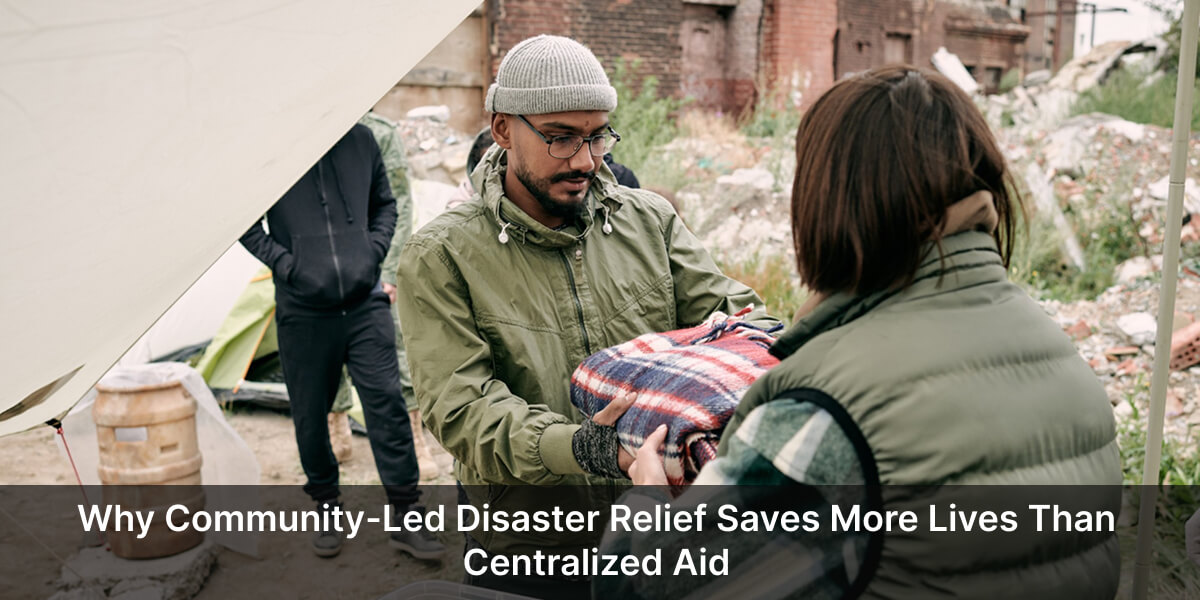
The government agencies although of much assistance in this management of floods, the NGOs and the local communities have a role to play too. Their physical proximity on the ground, quick mobilization and their physical exposure to the affected families enable them to respond better and faster in the face of imminent needs.
NGOs tend to intervene by providing resources such as food, clothes, drugs, and temporary shelter as well as working on long-term restoration of livelihood by restoring it and providing education. The communities, conversely, are proactive through their involvement in preparedness activities, upkeep of infrastructure locally, and dissemination of information about good safety measures. They combined their efforts and became resilient to floods.
The following are the major roles of the NGOs and communities:
- Immediate Relief– Providing food, water, clothing, and medicine to the impacted families.
- Rescue Assistance -Helping the government teams evacuate individuals and give them safe shelters.
- Medical Care and Hygiene– The establishment of medical camps, water hygiene and water-borne diseases.
- Rehabilitation– Assistance in restoration of homes, schools and livelihoods following the floods.
- Awareness Programs -Education of the people on flood preparedness, early warning response and safety measures.
- Community Involvement – The involvement of local volunteers who help in rescue rescue, shelters, and resources to all.
Related Blog: The Role of NGOs in Flood Management and Relief Operations
Challenges in Flood Disaster Management
Although much has been done regarding disaster preparedness and response, flood management in India remains a challenging task. Floods are usually overwhelming to the government agencies and even the communities due to their sheer nature and uncertainty of taking place. The lack of resources, poor infrastructure, and the lack of coordination contribute to the complexity of the situation.
Climate change is also another key challenge that has enhanced the frequency and severity of floods over the last few years. The unplanned development and urbanization further overload the drainage systems making cities and towns more susceptible. These are some of the issues that indicate that there should be stronger policies, better infrastructure and community participation.
The major challenges in the management of flood disasters are:
- Poor infrastructure – Weak embankment, poor drainage and lack of shelters aggravate flood effects.
- Limited Resources – The lack of funds, rescue gears and trained personnel postpones the response.
- Gap in Co-ordination – Inadequate flow of cooperation between government agencies, non-governmental organisations and populations.
- Unplanned Urbanization – Unplanned encroachment on floodplains and bad city planning make the cities more vulnerable.
- Climate Change – Floods become more common because the sea level is rising and rainfalls are becoming erratic.
- Awareness and Preparedness – Low community awareness will contribute to late response and risk.
H2: FAQs About Flood Disaster Management
In order to demystify some of the shared issues, the following are the most believed questions as to the management of floods:
Q1. What should individuals do during floods to stay safe?
Individuals ought to go to higher places, do not walk or drive across flood waters and obey evacuation orders given by the authorities. Possession of food, water, medicines, and vital documents in the form of an emergency kit is also safe in such an emergency.
Q2. Which government agencies handle flood management in India?
These are bodies like the National Disaster Management Authority (NDMA), Central Water Commission (CWC) and the National Disaster Response Force (NDRF). The state disaster management authorities and the local administrations are other important contributors to the flood control.
Q3. How does technology help in flood disaster management?
The level of rivers will also be monitored and it will be possible to predict floods and early alerts due to technology. Drones, GIS mapping, and mobile apps can also be applied during the planning of the rescue, distribution of resources, and the sustainability of quick communication during the emergency.
Q4. How can communities prepare for recurring floods?
Preparedness in respect to disaster preparedness in the case of the disaster can be done by disaster drills, preparation of local shelters, formation of volunteer teams and creation of awareness about safety measures. Flood resistant houses can also be built and the drainage system should be maintained in good condition, to minimize the risks.
Q5. What is the role of disaster management in flood situations?
Disaster management reduces life and property losses by creating preparedness, rapid response, and recovery processes. It makes them resilient in order to be able to withstand floods and recover faster than normal following the disaster.
Conclusion
These are floods which can be natural disasters, yet under good disaster management this can be controlled. Response and preparedness, early warning, long-term rehabilitation, and quick response are all critical to saving lives and safeguarding communities.
The disaster management in India is so ordered that it prepares the government agencies and communities better to handle the challenges particularly in the regions that experience floods on an annual basis. Risk mitigation through infrastructure may also involve developing a more resilient and less hazardous future in case of floods by enhancing coordination, awareness, and infrastructure fortification.