Table of Contents
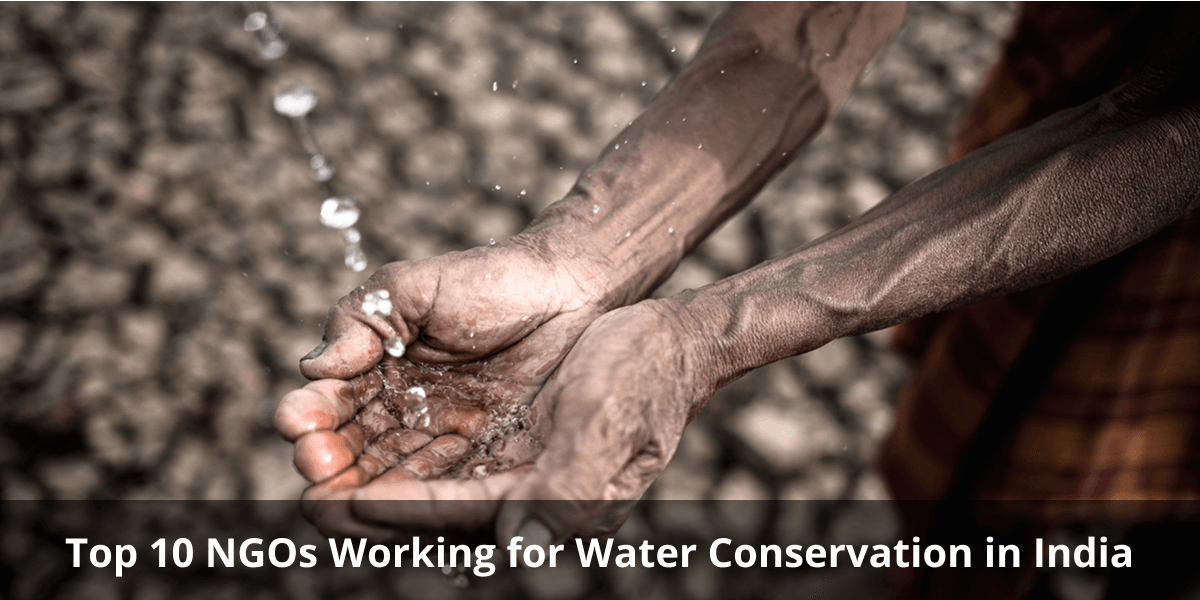
Our planet is water and water is the blood of the planet but India is facing a highly alarming situation of water crisis of depleted water resources. This valuable natural resource is being overstretched by the increasing number of the population of the country as well as the high urbanization that is manifested through frequent droughts, ground water depletion, and through the polluted rivers. Sustainable supply of clean water is no longer an issue of concern to the environment but it is now a survival, health and economic growth issue.
Water conservation has never been as urgent a need than it is in the modern decades. It has become difficult to find safe drinking water in rural and urban societies where they irrigate their fields and protect the old water bodies. It is in this respect that the non-governmental organizations (NGOs) play a major role. The Indian NGOs are also striving to conserve water and restore ecosystems through developing innovative solutions along with grassroots action.
This blog has given the Top 10 NGOs working in water conservation in India and they had the opportunity to give a reflection and impact of their work and how you as a person can also contribute to bringing this problem under control as it is one of the most important resources to us.
Importance of Water Conservation in India
Nearly 18 percent of the total global population is located in India that contains 4 percent of freshwater of the earth. This, and nothing more, is the reason why water conservation is not only the need of the country but it is vital to the existence of the country. The gap between demand and supply is widening every year as the agricultural sector, industries, and households continue to expand in terms of demand. The issue of water shortage can affect the lives of millions of people, food security and economic development, without a timely response.
Water has also got a strong connection with the cultural and ecological environment of India. Through the rivers, lakes, ponds, and wells, the communities have been sustained over the centuries and currently most of these natural resources are being polluted, overwhelmed or even drying up. Conserving water means conserving biodiversity, which guarantees farmers of their means of living and conserving the balance of the ecosystem which supports life.
Role of NGOs in Water Conservation
Although the government initiatives are making a huge contribution in tackling the water problems in India, the NGOs are the initiators at the grass root level. They operate at the local level and build awareness, bring in sustainable approaches, and restore old water systems that are mostly overlooked. The localized nature of them is such that solutions are feasible, culturally applicable, and sustainable.
The NGOs also facilitate scientific innovation and community needs. They unite technical skills and the involvement of people by encouraging the use of rainwater in villages through the institutions of watershed management programs. Most NGOs also incorporate schools, industries, and local authorities meaning that water conservation will be a shared duty and not an individual undertaking.
Above all, NGOs enable people to be in control of their water resources. Their work of training farmers, funding women led water management groups, and encouraging the young people to engage in such organizations is creating a movement that is not just focused on relief but on sustainable change in the future.
Top 10 NGOs Working for Water Conservation in India
Some NGOs in the country have made astonishing efforts to recover such water bodies as well as recharge ground water and encourage sustainable use of water. Not only are these organizations addressing the short term crises of water, but they are also making long-term effects by involving the community and being environmentally friendly. We shall examine some of the most influential NGOs in India, which are relentlessly striving to get water conserved.
1. Tarun Bharat Sangh (TBS)
Tarun Bharat Sangh is an organization that was established in the year 1975 to provide water to millions of people in Rajasthan, through its water conservation initiatives led by a renowned man by the name Rajendra Singh, better known as the Waterman of India. It is most famed with the re-invention of the traditional johad (earthen check dam) system that has not only led to the re-emergence of dried-up rivers, but also replenished the ground water levels in arid areas.
Community involvement and sustainable practices have transformed TBS in reviving more than 10,000 water bodies and changing the lives of millions of people living in the villages. They use the model that focuses on self-reliance, which is to educate communities to own their water resources and to be resilient to drought.
2. Aga Khan Rural Support Programme (AKRSP-India)
Since 1983, the Aga Khan Rural Support Programme has been working towards improving the rural living standards with a lot of focus on water management. Its operations mostly in Gujarat, Madhya Pradesh, Bihar, and Maharashtra allow the communities to employ sustainable agriculture and sound irrigation techniques, which are facilitated by AKRSP.
Among their major contributions include watersheds and micro-irrigation systems that allow the farmers to produce more products with less water. They also promote ground water recharging and collection of rain water whereby despite dry seasons, villages have safe drinking water. One community-based activity that has led to direct income and food security over the years is water conservation which has been done through partnership with local panchayats and self-help groups by AKRSP.
3. Watershed Organisation Trust(WOTR)
Watershed Organisation Trust (WOTR), a Pune based organisation has been leading in watershed management since 1993. The NGO aims at reclaiming depleted lands, preserving rain water and sustainable agriculture.
In its effort to ensure that the rural population manages its waters effectively, WOTR has enabled the rural population to take charge of their water resources through its community based strategy. The water supply in their projects has not only enhanced the availability of water, but also made the climate more resilient to droughts in arid regions.
4. BAIF Development Research Foundation
Since 1967, BAIF Development Research Foundation based in Pune has been striving to enhance the livelihoods of the rural communities with particular attention to the management of natural resources. Promotion of watershed development and water resource management in semi arid and drought prone areas is one of their major contributions.
The organization combines water conservation and sustainable agriculture and livestock development. They have helped farmers to get access to good sources of water, more productivity, and less rural to urban migration. The holistic strategy adopted by BAIF guarantees water and economic development of the rural population.
5. Development Alternatives (DA)
Development Alternatives is a popular NGO that strives to encourage sustainable development by environmental-friendly solutions. Within water conservation, DA focuses on the application of new technologies in rain harvesting, recharging groundwater and decentralized management of water.
The organization is also engaged in extensive awareness in order to promote responsible use of water. Through their projects, they have been able to alleviate water stress in various places, but at the same time they have enabled communities to have the means and the knowledge to effectively manage their own resources.
6. Action for Food Production (AFPRO)
Since 1967, Action for Food Production (AFPRO) has been operating in the rural communities with a major focus on water resource development. The NGO focuses on the planning and installation of irrigation systems, ground water recharge facilities, and watershed management projects.
The initiatives of AFPRO have made drought-stricken areas have access to good drinking and agricultural water. Not only are they focused on the long-term sustainable solutions that are technology-driven but also community-friendly, but they also contribute to better food security and livelihoods of marginalized farmers.
7. Sehgal Foundation
Sehgal foundation has been involved in enhancing water availability and quality in rural India. The NGO encourages rainwater collection, water storage tanks, and building of check dams besides trying to enhance recharge of ground water.
Their schemes are integrated programs that involve infrastructure growth and capacity building of communities so that the villages can be well in charge and manage water resources. The projects in Sehgal Foundation have not only dealt with water shortage, but also with sanitation and general rural health.
8. Jal Bhagirathi Foundation (JBF)
Jal Bhagirathi Foundation is a Rajasthan based foundation that aims at reversing the serious water scarcity problem of arid and semi arid land. The NGO focuses on and promotes the traditional methods of water harvesting that includes the construction of johads, baoris and tanks, used by the desert populations throughout centuries.
Through empowering the local villagers, JBF will make water management sustainable and community-owned. Their efforts have enabled people to have access to clean drinking water, lessen the burden on women of having to carry water and, in general, better living conditions in the desert regions.
9. Gram Vikas
Gram Vikas, based in Odisha, has a more than forty-year history of enhancing rural development in water, sanitation, and livelihood programs. The organization has been the first to introduce such concepts as the MANTRA (Movement and Action Network to Transformation of Rural Areas), which combines water and sanitation with community empowerment.
They are conserving water through their water conservation programs and activities which aim at ensuring that all rural households are supplied with clean water and sanitation amenities. Gram Vikas has been able to improve the marginalized communities by integrating infrastructure with awareness to enhance fair usage of water resources.
10. Sir Ratan Tata Trust (SRTT)
Sir Ratan Tata Trust (SRTT) has played a huge role in sponsoring water conservation and rural development projects in India. The trust funds and collaborates with the grassroots organizations to provide large scale watershed management, rain water harvesting and irrigation projects.
SRTT has been able to through its efforts increase the productivity of agriculture, increase groundwater recharge, and increase resilience to droughts in the rural areas. They focus on capacity building and community participation which makes the advantages of water conservation to be extensive and sustainable.
Related Blog: Top 10 NGO for Environment Protection in India You Should Know About
How You Can Contribute to Water Conservation Efforts?
Even though NGOs are spearheading massive efforts, individual contributions are also the giant contribution in water conservation. A single drop saved at home or in community will have a significant contribution. You can contribute to the water conservation movement in India by simply adopting simple habits and by collaborating with organizations that operate to raise awareness about this cause.
It is not only the rural or drought-prone areas where it is important to conserve water, but it is also important in the urban areas where the high rate of population increase, and industrialization have strained the resources. There are numerous ways of contributing; it might be through changing your day-to-day practice, volunteering, and donating.
These are some of the ideas that can work:
- Collect rain water in your houses or community in the housing societies.
- Leaks should be closed immediately to eliminate unnecessary wastage of taps, pipes or toilets.
- Use appliances that use less water like low flow showerheads and toilet dual flush.
- Water/ wash the garden or do cleaning with grey water (washing machine/ sink).
- Donate to local non governmental organizations or volunteer or create awareness.
- Adopt intentional actions like turning tabs off when brushing or washing.
- Create awareness about water shortage in the society by holding awareness campaigns.
FAQs About Water Conservation NGOs in India
NGOs have a large number of individuals interested in contributing to water conservation but usually they are left with the question of how they work and the roles they can play. The following are some of the frequently asked questions that are answered in a simple manner:
Q1. Do NGOs receive government support for water projects?
Yes, lots of NGOs cooperate with governmental institutions and take water projects on board and get financial or technical assistance. Nevertheless, a significant part of their finances is also provided by the means of the personal donations, the corporate social responsibility (CSR) programs, and the foreign grants.
Q2. How can I volunteer for water conservation programs?
Through the official websites or local offices, you can get in direct contact with NGOs. Most organizations will gladly accept volunteers in the field, awareness or even online activities like fundraising and online advocacy.
Q3. Which is the most famous NGO for water conservation in India?
Tarun Bharat Sangh (TBS) is one of the most famous NGOs operating in the sphere founded by Rajendra Singh. The so-called Waterman of India, Singh and his crew have been able to rejuvenate several rivers and the ancient water bodies in the state of Rajasthan and this is a positive development that is encouraging others in the rest of the nation.
Q4. What are the major challenges NGOs face in water conservation?
NGOs in most cases have the challenge of insufficient funding, ignorance of the communities and the challenge of weather such as unpredictability in rainfall. Moreover, it is sometimes hard to ensure community engagement in the long run without constant support as well as resources.
Q5. Can small donations make an impact in NGO-led water projects?
Absolutely. The little one can do is contribute to NGOs to construct water storage tanks, check dams (repaired), or to create awareness activities. These small amounts when added together with donations made by other people make a huge difference.
Conclusion
Water is the blood of any society and it is not an option but a need to conserve it. The NGOs mentioned above demonstrate that committed movements, in collaboration with the local community, can make a positive change. They have given us hope to revive rivers and come up with innovative water management systems, and this is an example that we all should be proud of.
Nevertheless, it takes collective responsibility to conserve in the real sense. Each and every one of us can do their part in preserving this valuable asset by practicing mindfulness at home, donating to the efforts of NGOs, or volunteering in programs that help the community. The future generations will have a world where water is plenty and available to everyone.