Table of Contents
The issue of disaster management has occupied one of the most important positions in the agenda of the concerns of the world where uncertainty is higher than ever. There are also catastrophes, be it in the shape of devastating floods and forest fires, even the shape of pandemics and industrial accidents that have found their way and become part and parcel of modernist life. It is not possible to avoid them but where we can reduce their effects through preparation and planning and being conscious of them.
It has been leading to the deaths of millions of people in a year, destruction of infrastructures and displacement of millions of people. Besides the physical and material harm they bring to human beings, they also have an impact on the long term developments, social structure and mental health. With the temperature constantly increasing on our planet and the population on the rise, the calamities are larger and more common and this should be addressed more earnestly, more intelligently and coordinated in the way it handles disasters.
Disaster management is not simply a process, but it is a lifeline; a lifeline that assists the societies to anticipate, react and recuperate the disasters. This is what will be in the spotlight of our blog: what disaster management is and why it is so pressing in the world today and what we all can contribute to the task of making sure that our future is a more secure one.
What Is Disaster Management?
Disaster management is a deliberate and methodic procedure of preventing, mitigating, planning, responding as well as recovering to both natural and artificial disasters. It is a series of steps that will be initiated way before the instance of a disaster will happen and continue to happen even after the disaster has happened where the threat is not as imminent.
It is simply possible to state that it entails the entire processes of the early warning mechanisms, procedure of evacuation, to the restoration and rebuilding of the disaster. This is in order to minimize loss of life, property damage and make sure that community is well placed to recover within a short period of time.
This involves an enormous collaboration between the various stakeholders that include governments, Non-governmental organizations, the local communities, businesses and individuals. All of them are used to their individual purposes and make the resilience stronger.
Disaster Management is made of four phases:
- Mitigation- Reduction of the risks by sustainable planning, infrastructure and policies.
- Preparedness- Training, exercises and creation of awareness to be prepared.
- Response- Take is an emergency action intended to organize the response in case the disaster has already occurred to rescue the lives and property.
- Recovery – The medium-term action to get normalcy, reconstruction of living standards and enhance sustainability in the future.
It is a science, technology, community involvement and governance of such disaster management, which will help it not only to react to the disaster, but it is preparing intelligently.
Related Blog: What Is Disaster Management? A Complete Beginner’s Guide
The Rising Need for Disaster Management
The incidents and intensity of disasters have been literally on a steep rise in the past decades and it has been seen everywhere in the world. This has been supplemented by the climate change that has facilitated the unpredictability in the weather patterns and extreme conditions.
As indicated in the statistics provided by the United Nations Office Disaster Risk Reduction (UNDRR), it was disclosed that the rate of occurrence of natural disasters has been increasing five fold over the last 50 years. In the period between 2000 and 2020, the number of cases of affected persons all over the world reached and exceeded 3.4 billion. These figures are not merely figures, but families, communities and economies that have been ripped off.
Billions of damages have also been brought about by floods, cyclones and droughts particularly in India. The impacts of natural disasters particularly to the weak areas have been aggravated by scalding urbanization and deforestation. The significance of risk preparedness and management systems can also be explained by industrial accidents, oil spills and fires.
Besides it, the COVID-19 pandemic proved that even the developed world is unprepared to handle the crisis of this magnitude. It was being used to drive home the point that disaster management is not an issue of only natural hazards but also about planning to avert any emergency that can be threatening to life, property and even stability.
It is this interdependence that has caused the fact that the tragedy of one nation can easily be shifted to other nations, be it a failure in the chain of supply, the exodus, etc. International cooperation and planning is even more needed.
Key Reasons Why Disaster Management Is Important
Management of disasters is not just a subject matter or the concern of the state but has a direct bearing on the safety and health of every individual. To comprehend the core of its significance in the contemporary days, we will dwell upon the following reasons:
1. It Saves Life and Minimizes Human Suffering
The savings of lives are the main objective of disaster management. There are early warning mechanisms, evacuation and first response mechanisms to ensure that something is done before it is too late. The Indian Meteorological Department, as an illustration, has contributed to the saving of the lives of many people in coastal storms by a significant margin due to its better cyclone forecasting.
Trained communities (where people have been trained on how to behave in case of loss) such as the places to run, the things to carry and ways to help out other individuals make the scale of loss significantly lower. The response to trauma, injury, and disaster mayhem can be minimized by taking action.
2. It Protects Infrastructure and Property
The catastrophes cause the ruin of years of development in a few hours. Landslides, earthquakes and floods tend to leave roads, hospitals and power networks in massive degradations. A lot of this damage can however be prevented through proper planning like erection of earthquake resistant structures or zoning of flood prone regions.
This can be realized by governments using risk sensitive urban planning in such a way that the cities will be built in a manner that they are not vulnerable to shocks and will not be falling down in case shocks occur.
3. It Makes the Economy Stable
The economic damages in case of disasters are typically huge. They do not only cause physical destruction, but also havoc to industries, agriculture and employment. The World Bank estimates the loss of the economy in case of a disaster at 520 billion per disaster, per year globally.
These economic losses can be reduced by the countries by the pre-disaster investments, which are insurance, contingency funds, and resilient infrastructure. When the businesses are well prepared, they would come out faster and hence the economy would be in check and livelihoods would not be wasted.
4. It Improves Greenness of the Environment
Environmental degradation is brought about and caused by disasters. The deforestation, irresponsible mining, and water pollution may lead to the flood, landslides and drought. In disaster management, there is the incorporation of sustainable practices like the reforestation, wetlands and eco sensitive planning conservation to conserve the natural eco systems.
Such a balance will ensure that the natural defense mechanisms of the planet (including mangroves, forests and coral reefs) that can withstand a disaster that is a result of climate are maintained.
5. It Enhances Community Strength
With an educated, informed and prepared community, the chances of it resisting and overcoming disasters are very high. Neighborhood emergency plans, school and local training programs on awareness allow the citizens to be in control.
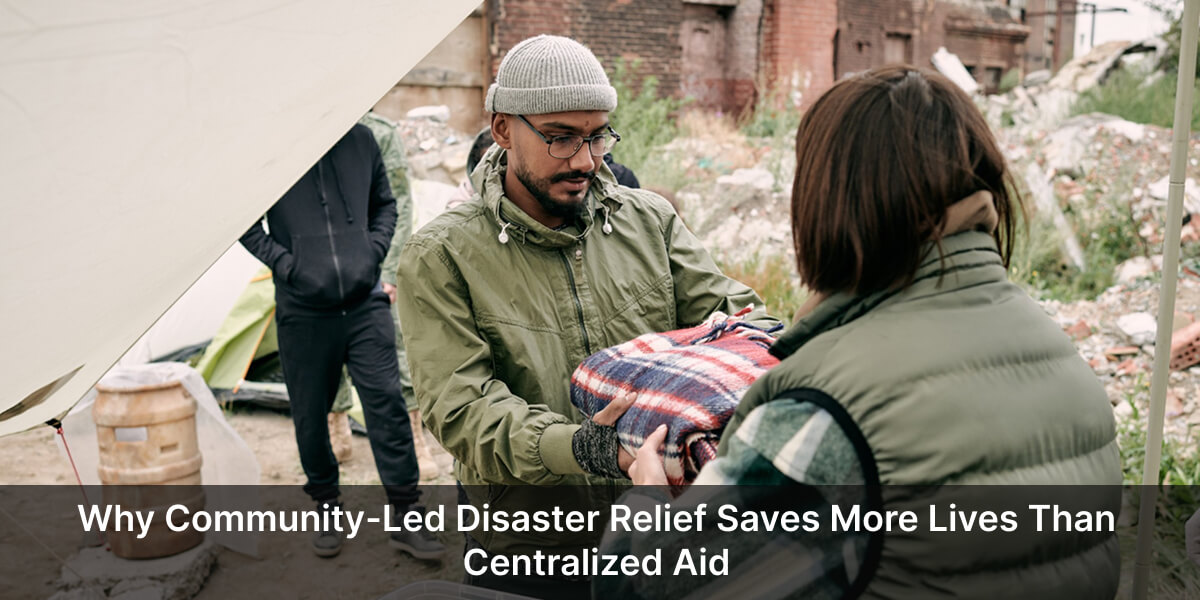
Having community disaster committees, volunteer networks and first-aid teams, communities often react faster than the external help. Such mini-initiatives are the pillars of the big disaster resiliency.
6. It Improves Governance and Policy
During the management of disasters, it becomes easy to coordinate the activities of local, national and international agencies. It puts pressure on governments to develop high-level policies, enforce safety regulations and invest in upstream mitigation.
Countries that are well prepared to handle any disaster like Japan will recover faster and inflict less harm. That is the relationship between government and preparedness.
7. It encourages Technological Change and Innovation
Technology has helped us to transform the manner in which we anticipate and handle disasters. Government officials can be proactive with the help of AI prediction, satellite tracking, rescue drones, and GIS maps.
As an example, predictive analytics can be applied to discover regions of high risks, and mobile apps can be applied to provide notifications in a timely manner. These inventions are life and death- such inventions save very important minutes.
Future of Disaster Management
The field of disaster management is a dynamic experience because the problems grow with the help of science, technology, and transnational collaboration. Its future is going to be determined by several important trends:
- AI and Predictive Analytics: The real-time analysis of data will provide an opportunity to predict the disaster and simulate the potential damage.
- Smart Cities and Resilient Infrastructure: Buildings will be built to resist earthquakes, floods and others.
- Climate Adaptation Planning: The governments will put together the climate action apparatus to disaster prevention.
- Local Response Models: Community empowerment and training will strengthen the first line of defense.
- International Cooperation: Countries will share the technology, skills and emergency equipment.
- Digital Awareness Campaigns: Social media and mobile alerts are being used to spread awareness to the citizens at an accelerated pace.
- Green Infrastructure: Environmentally friendly building with less carbon footprint and more resiliency.
The future of disaster management is preventative rather than an intervention to ensure that the societies become proactive and not reactive.
FAQs About Importance of Disaster Management
Q1. What role do NGOs play in disaster management?
NGOs are one of the most important partners for immediate relief and long term recovery. They provide food, medication and a shelter during a crisis, often before the government’s help reaches. Post disaster they also help with rebuilding their homes, providing psychological help, basically helping the affected areas to rebuild their lives.
Q2. How can businesses benefit from disaster management planning?
Businesses that help during such crises and adopt disaster management strategies protect their employees, brand reputation and assets. By securing data, maintaining backup systems and preparing emergency protocols, they make sure operational continuity. This minimises financial loss and also boosts the trust of the public and gains their confidence.
Q3. What is the role of governments in disaster management?
Governments are the backbone of disaster management. They run emergency operations, coordinate national response systems , create law and allocate resources.They also fund for research and build infrastructure , working with military, NGO’s , international bodies and large scale relief efforts.
Q4. How can individuals prepare for disasters?
Readiness starts from home. Every person can prepare emergency kits, get to know evacuation routes and can be informed through official alerts. People should take part in mock drills and help neighbors, especially the elderly or disabled which will make a massive difference. Personal awareness helps create safer communities.
Q5. What are the four phases of disaster management?
The key aspects are Response, Recovery , Mitigation and Preparedness. These aspects reduce risk before disaster, ensures readiness, deals with immediate action and focuses on rehabilitation and rebuilding after the event.
Conclusion
Disaster is no more a choice rather it is a global necessity. In the time where change in climate, urbanization , and technology interconnect, the risks are more complex and extensive. Impactful disaster management helps in providing a structured plan to protect lives, property and planet.
By keeping the risks in mind , investing in safety shelters and fostering collaboration. Together, societies can turn their weaknesses into strengths. Every person, business, and government has a part to play in building a world that can stay strong and bounce back after any crisis.
Being prepared today means staying safe tomorrow , that’s what real strength and resilience are all about.
Join Hands with Sakal Relief Fund to Aid Disaster-Affected Communities
At the Sakal Relief Fund (SRF), we believe that caring for others and being prepared always go together. For many years, SRF has helped people all over India during disasters, rebuilding homes, restoring jobs, and supporting families in their toughest times.
When you support SRF, you’re not just giving money but you’re helping create a safer and stronger future for everyone.Together, we can make sure no community has to face a disaster alone.Let’s come together to stay strong and support one another in every small act of help can make a big difference.