Table of Contents
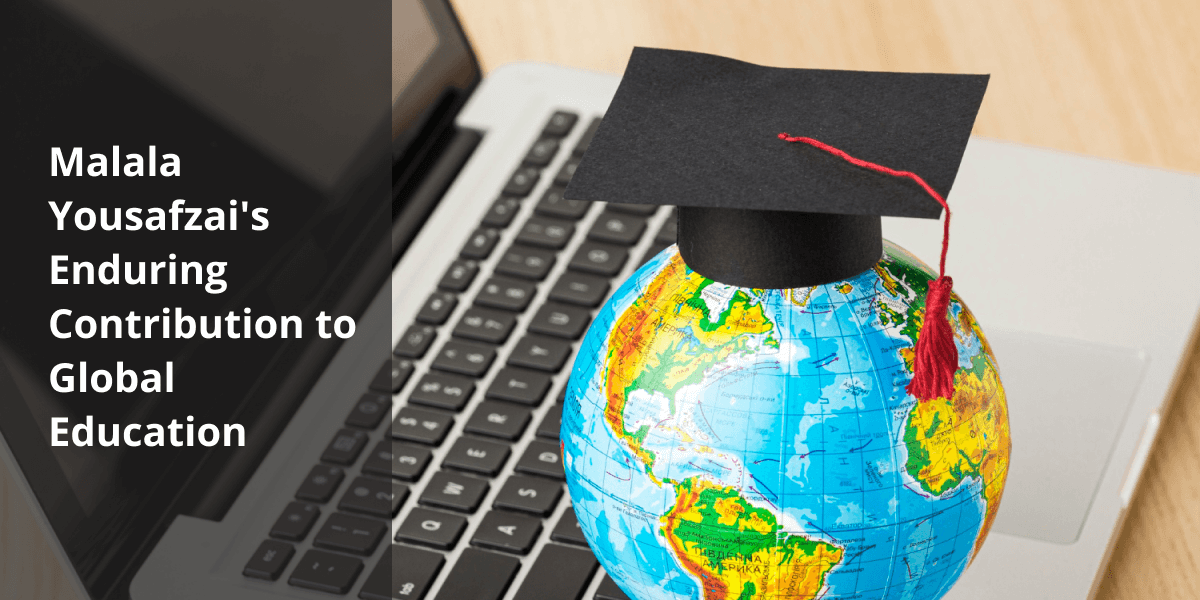
Education is the means to knowledge. It is what kills our ignorance and brings forth the true greatness of our being. Education has been an important subject for every nation across the globe. Each country deals with it differently and over the past 50 years, it has become a global objective to educate the world’s citizens. Many great people have come forth to aid this cause and one of them is Malala Yousafzai.
Who is Malala Yousafzai?
Malala Yousafzai is the founder of the Malala Fund and a women’s activist who spent her entire life advocating the education of girls. She is the youngest Nobel Prize laureate ever and her achievements and initiative have changed the lives of many people and brought them out of oppression.
Early Life & Childhood
Malala was born in Mingora, Pakistan on July 12 1997. Her father Ziauddin Yousafzai is a great advocate of education and is a well-known writer and poet. Malala studied under his guidance and by the age of eleven was fluent in English, Urdu and Pashto. She began her first blog under a pseudonym at the BBC Urdu where her activism began. Her articles spoke against the Taliban and their oppressive actions towards women. In the year 2012, Malala was shot in the head by a Taliban gunman but she somehow managed to survive the attack. It was at this time that her father shipped her off to England to complete her education.
Early Activism
Malala was an extremely intelligent person and her activism career started at a very young age. When she was 11 she started writing for BBC Urdu under the pseudonym Gul Makai. She wrote about the atrocities committed by the Taliban on women and how the education of women was banned. She continued to give many interviews and wrote many articles till 2012 when the Taliban tried to kill her. She was on her way home from school on the school bus when a gunman shot her in the head. Miraculously she survived the attack and was immediately sent to England for her protection.
Education
Ziauddin ran a school and was an education activist himself. Malala studied at her father’s school called Khushal Public School which helped her gain a lot of perspective at a very young age. Fluent in Urdu, English and Pashto, Malala spent most of her early years reading books and aspiring to be a doctor.
Considering the state of education in Pakistan under the Taliban where women weren’t allowed an education, Ziauddin made arrangements to send his daughter to the all-girls Edgbaston High School in Birmingham in 2013. After her schooling, Malala was accepted at Lady Margaret Hall, Oxford where she completed her degree in Philosophy, Politics and Economics.
Key Contributions to Global Education & Society
Malala Yousafzai is an advocate for women’s education and wellbeing. Her own life experiences have compelled her to fight for the cause and her initiatives have alleviated a myriad of people.
- In 2013 Malala co-founded the Malala Fund which aids the education of girls. The Fund also organises initiatives to spread awareness about inequality and provides incitement to policy changes on a global scale that impact the education of girls.
- Her Nobel Prize-winning recognition put her on the world map which further brought in supporters.
- Some of her initiatives are focused on providing educational facilities for kids in conflict zones.
- One of her main objectives is to change global policies on education that would benefit all children in an equal manner.
- Malala has authored a book called “I Am Malala: The Girl Who Stood Up for Education and Was Shot by the Taliban”, which gained much success and influenced many people. The earnings from the book sale were further pumped into the Malala fund. Malala also gives many speeches and discourses about her struggles and her objectives.
Receiving the Nobel Peace Prize
10th December 2014 marked an important moment in history when the youngest Nobel Prize laureate Malala Yousafzai won the Nobel Peace Prize for her remarkable work in the field of education. The award ceremony was held in Oslo, Norway and her acceptance speech enlightened the audience about the state of education across the globe, especially for girls and the importance of equality in education.
Other Key Achievements and Honours
- Malala was honoured with Canadian Citizenship as a gesture from the Canadian Government for her hard work in the field of education.
- Malala was invited to speak at the UN Youth Assembly Speech.
- Malala received the Symbol of Courage in 2015 from the Clinton Foundation for her achievements in education.
- She has been in various magazines and was honoured by the Times magazine as one of the hundred most influential people in the world.
- The Simone de Beauvoir Prize in 2013.
- The Liberty Medal in 2014.
- Glamour Women of the Year Award 2013.
Related Blog: Jyotiba Phule’s Contribution to the Society: Pioneering Women’s Rights and Empowerment
FAQs About Malala Yousafzai
Q1. What happened to Malala Yousafzai in 2012?
In 2012, Malala was attacked by the Taliban and was shot in the head by a gunman. Luckily she survived the incident.
Q2. What is the Malala Fund?
The Malala Fund was founded by Malala and her father. The fund provides quality education to girls. The fund provides education for 12 years and also organises initiatives to spread awareness of the cause.
Q3. What is Malala’s book “I Am Malala” about?
The book is about Malala’s struggles as a girl in Pakistan and her experience of being shot by the Taliban because of her advocacy for education, women’s education and oppression in society.
Q4. How did Malala Yousafzai become an advocate for girls’ education?
As a child, Malala grew up in Mingora which was an area run by the terrorist organization Taliban. The Taliban set the rules and their beliefs oppressed women and banned them from education. Malala’s main influence was her father, who advocated education for all and ran schools in Pakistan to educate children, especially girls.
Q5. Where is Malala Yousafzai from?
Malala is from Mingora, Swat District, Pakistan.
Conclusion
On a concluding note, Malala has made some incredible contributions to global education and is still working towards the alleviation of oppression and equality in education.